

Stage Rivals · Deckbuilding roguelike
Build your deck.
Own the stage.
Take a performer on a turn-based tour through an illustrated world of musical rivals. Build your deck from instrument cards, find combinations that fit your style, and make every measure count.
In development. Screenshots show a development build; content and presentation may change.
 View full screen ↗
01 · overview
A musical world. A tactical adventure.
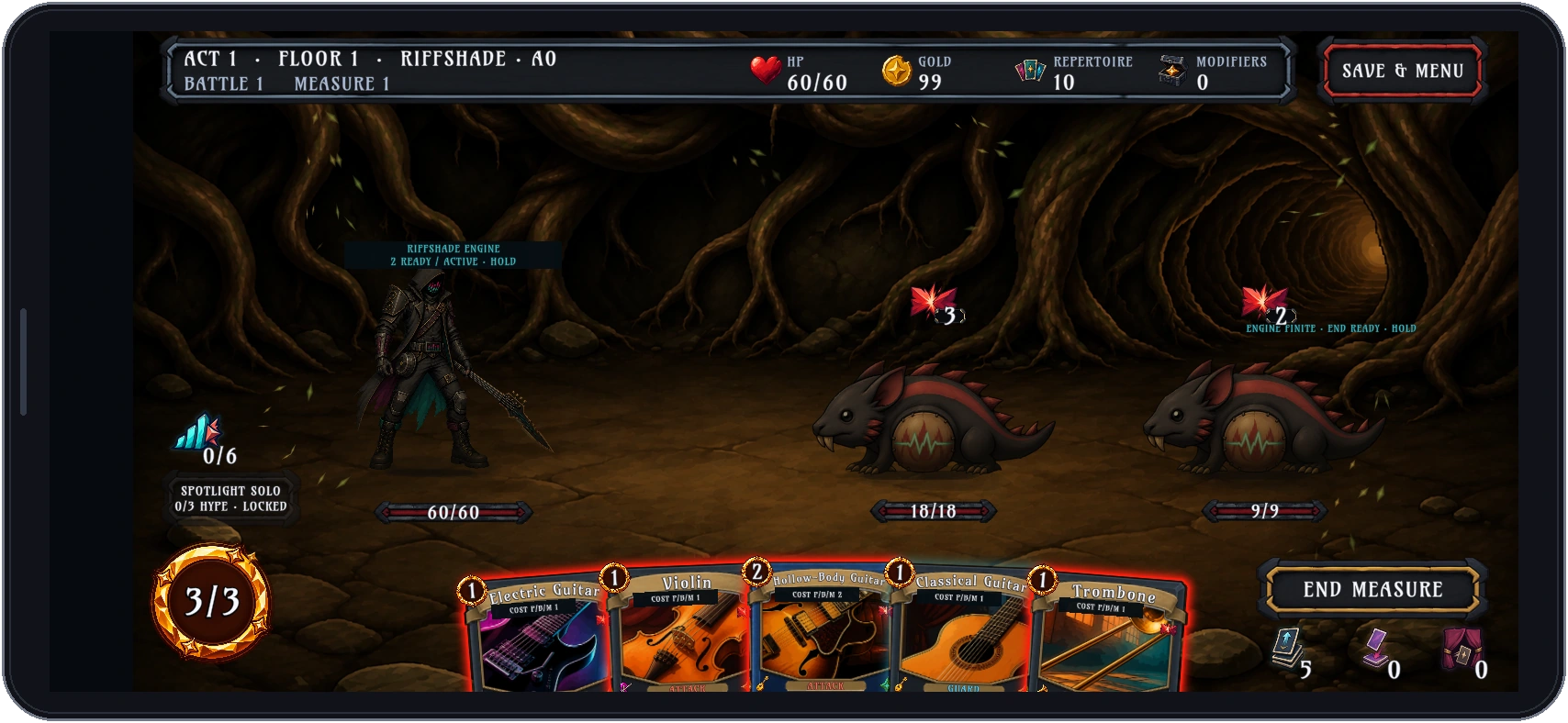
Stage Rivals brings the decisions of a deckbuilding roguelike into a world built around instruments, performers, and the stage. Your hand offers the possibilities; your Harmony sets the budget. Work out what the rivals are about to do, decide what you can afford, and choose whether this is the moment to strike, defend, or prepare.
The strategy continues between battles. Pick a route, weigh a shop purchase against the next challenge, and refine the cards you bring into combat. A successful tour depends on how those choices work together.
02 · how it plays
From the first card to the final Headliner.
- Choose your performer. Start with a character whose strengths suggest a direction for your deck. Discover different approaches as more performers become available.
- Plan your route. Choose your next stop across the tour map. Battles, events, shops, and recovery create different opportunities and trade-offs.
- Play the measure. Inspect rival intent, manage Harmony, and play instrument cards to deal Impact, gain Shield, and support your next move.
- Refine the setlist. Add cards to your Repertoire, choose the ones you take into battle, and look for effects that reinforce each other.
- Face the Headliner. Bring your evolving build to the major encounter that closes an Act, then carry the tour forward.
03 · combat
Read the rival. Make your move.
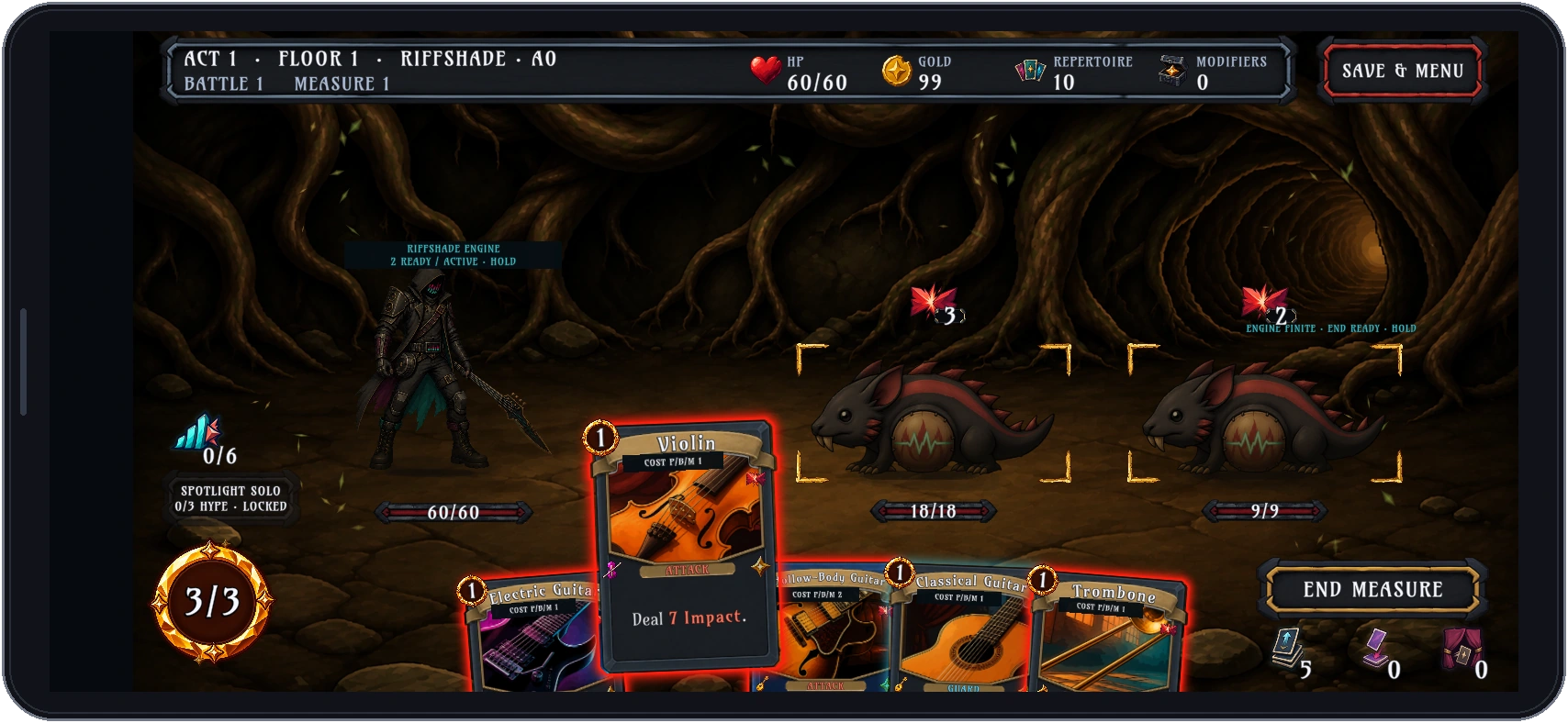
Rivals show their intentions before they act. Use that information to decide how much defense you need and how much pressure you can apply. Harmony limits what you can play in a measure, so the strongest move is often a sequence of cards that helps the whole hand work together.
Build Hype. Deliver your Signature.
Playing cards in particular combinations completes Phrases and builds Hype. Spend that Hype on your performer's Signature ability. Venue rules can reward a particular Phrase, giving you another reason to think about the order of your cards and adapt your setlist before a fight.
The right sequence can do more than the cards do alone.
View full screen ↗04 · deckbuilding
Collect instruments. Compose a strategy.
Guitars, strings, keys, percussion, and wind instruments become the tools of your build. Some cards provide direct pressure or protection; others support card flow, preparation, or carefully ordered plays. Choose cards for what they bring to the deck as a whole.
Your Repertoire holds your acquired cards. Your battle deck is the setlist you choose to bring into a fight. That distinction gives you room to experiment without treating every new card as an automatic addition to your next hand.
 View full screen ↗
05 · modifiers
Give your tour its own signature.
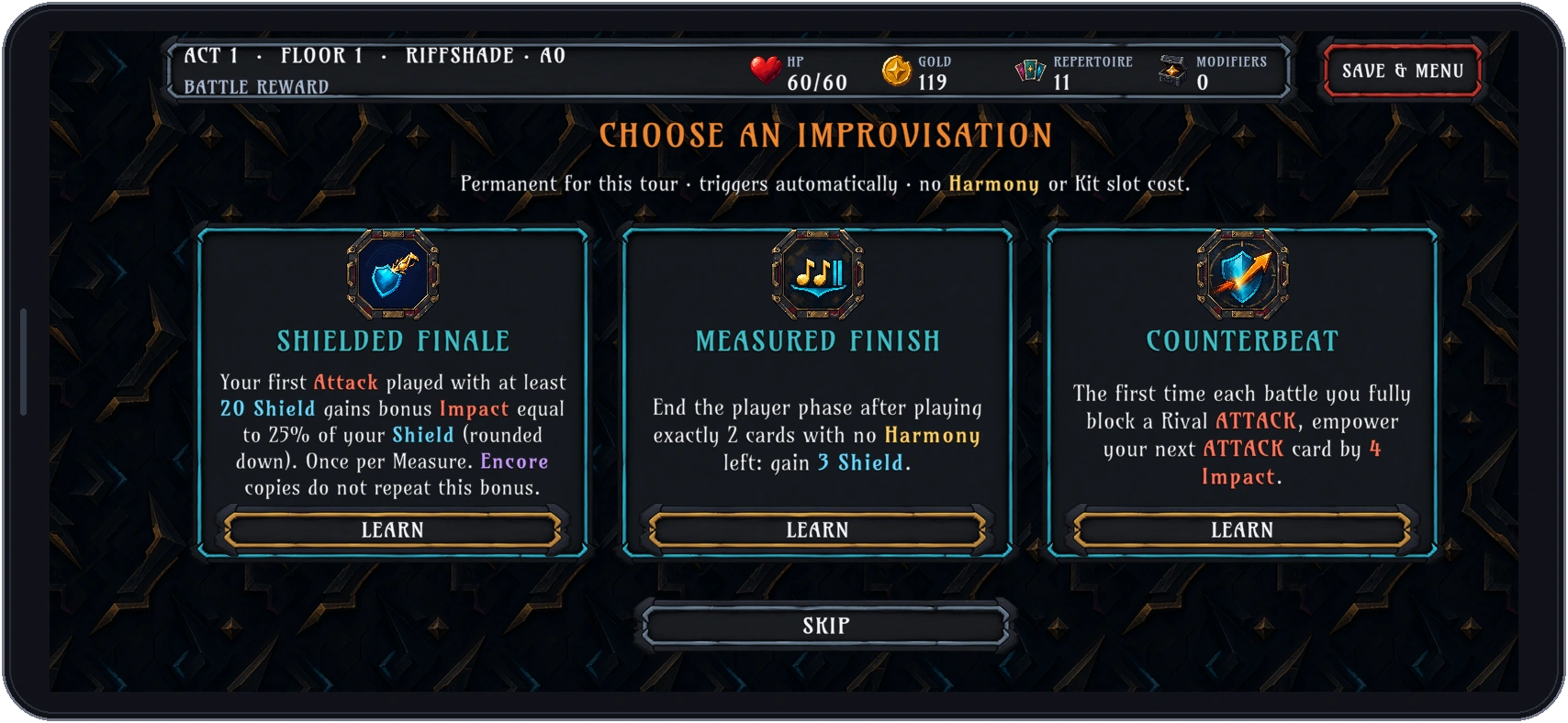
Improvisations — effects that stay with you. These passive additions shape your tour and reward different ways of playing. Look for ones that support the cards and habits your build already relies on.
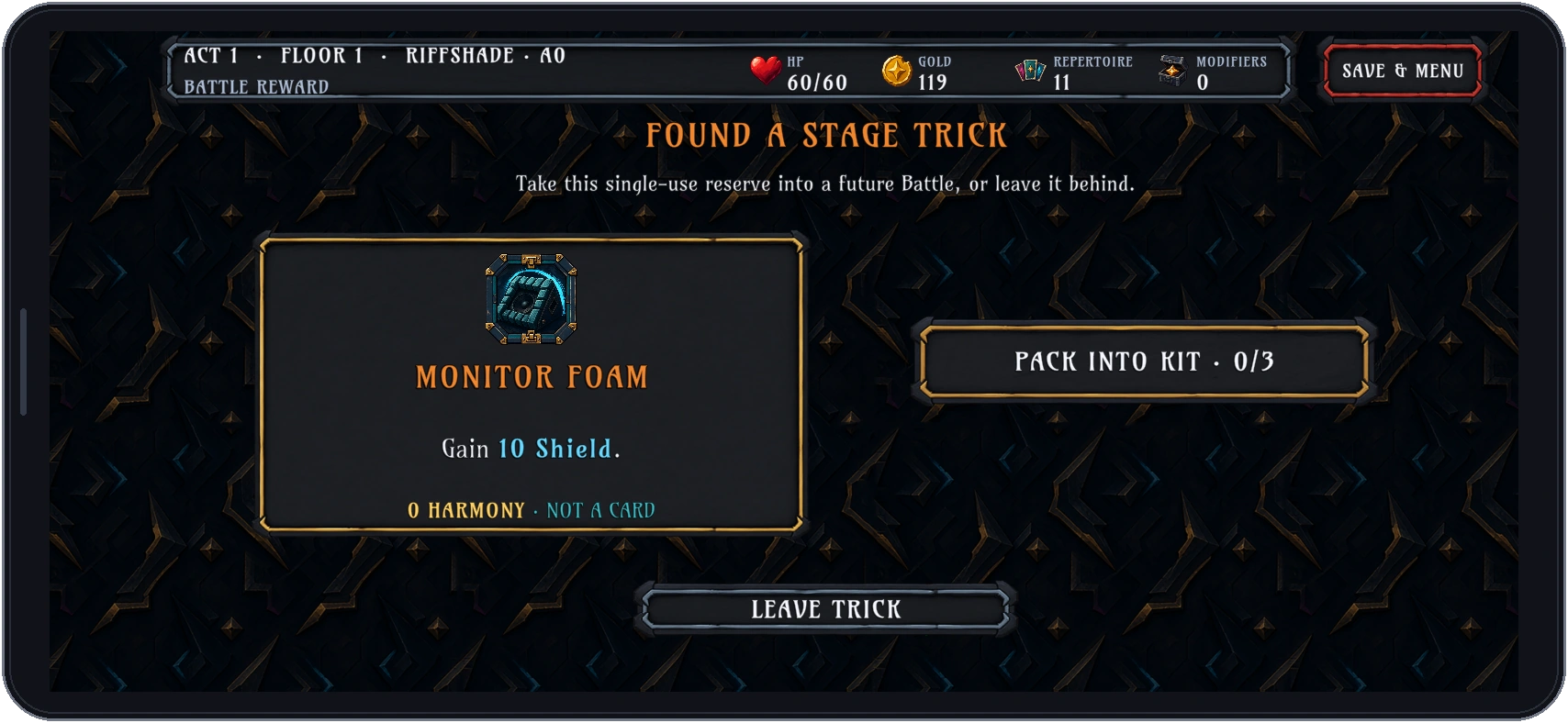
Stage Tricks — a little backstage ingenuity. Consumable tools can add Harmony, provide Shield, draw cards, restore health, or deal Impact. Use one when its immediate benefit can change the fight.
Shops and preparation — decisions beyond combat. Spend Gold deliberately, improve your options, and revisit your setlist before taking on the next encounter.
 View full screen ↗
06 · performers
Find your way to play.
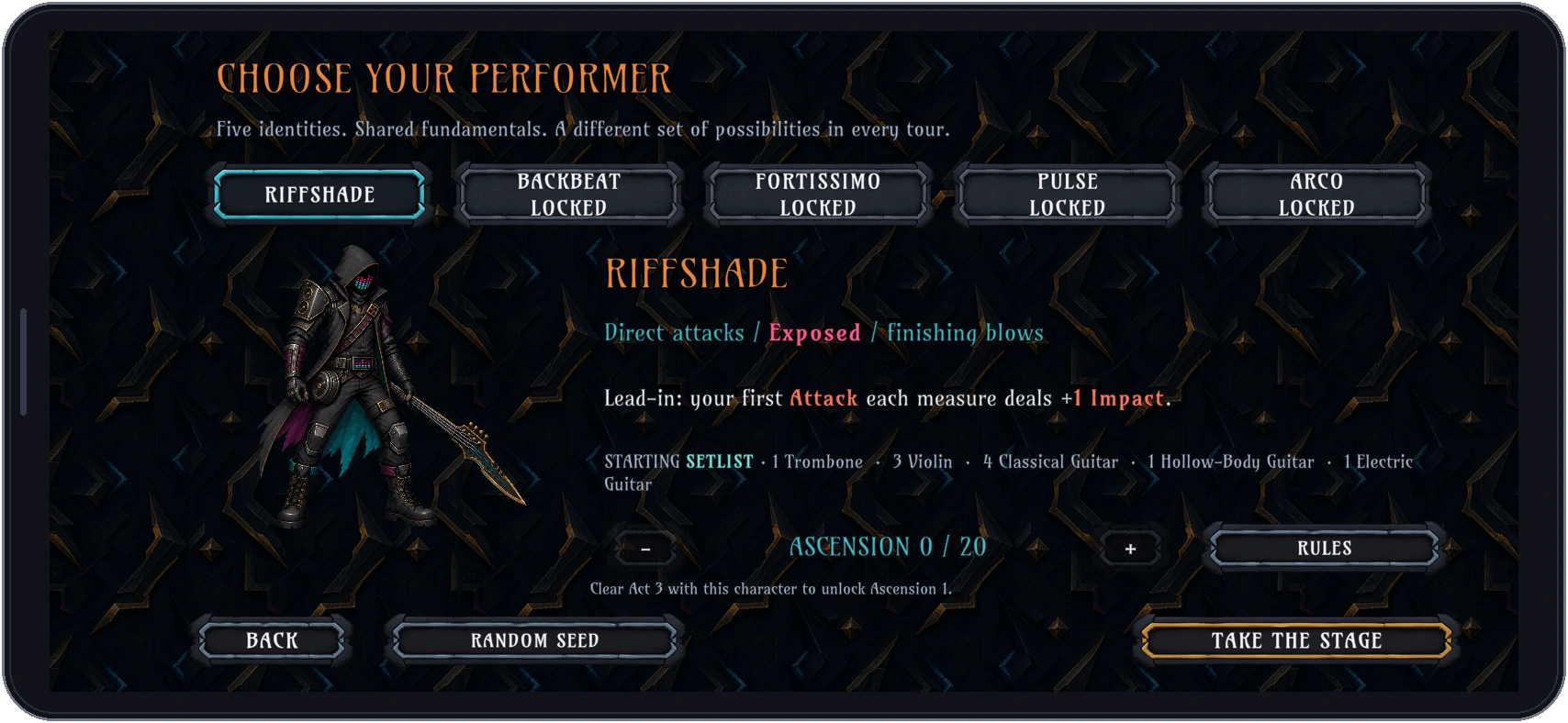
The roster offers different starting points for a build. Character availability follows progression; the full roster is not selectable at the start.
- Riffshade: Direct attacks, Exposed, and finishing blows.
- Backbeat: Defensive timing, weakening rivals, and counterplay.
- Fortissimo: Held cards, preparation, and powerful attacks.
- Pulse: Card draw, Cycle, and turning a busy hand into more Harmony.
- Arco: Instrument-family sequences and attacks that build on what came before.
 View full screen ↗
07 · route
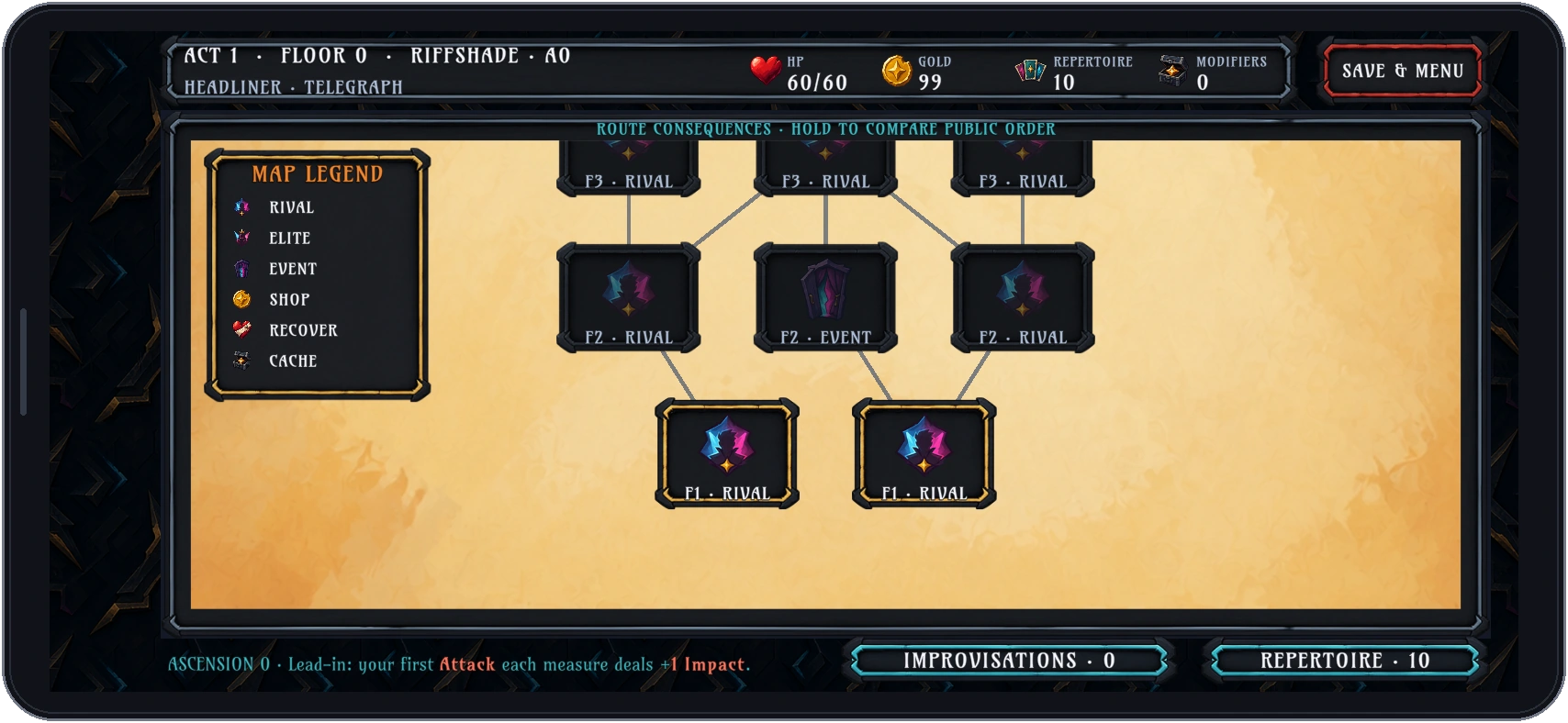
Every stop changes the performance.
Travel through changing stages and face a cast of musical creatures, from small opening encounters to Elites and Act-ending Headliners. Route choices give you reasons to consider more than the next battle: what the deck needs, how much health remains, and which opportunities are worth pursuing.
 View full screen ↗
08 · Gameplay gallery
See the tour in action.
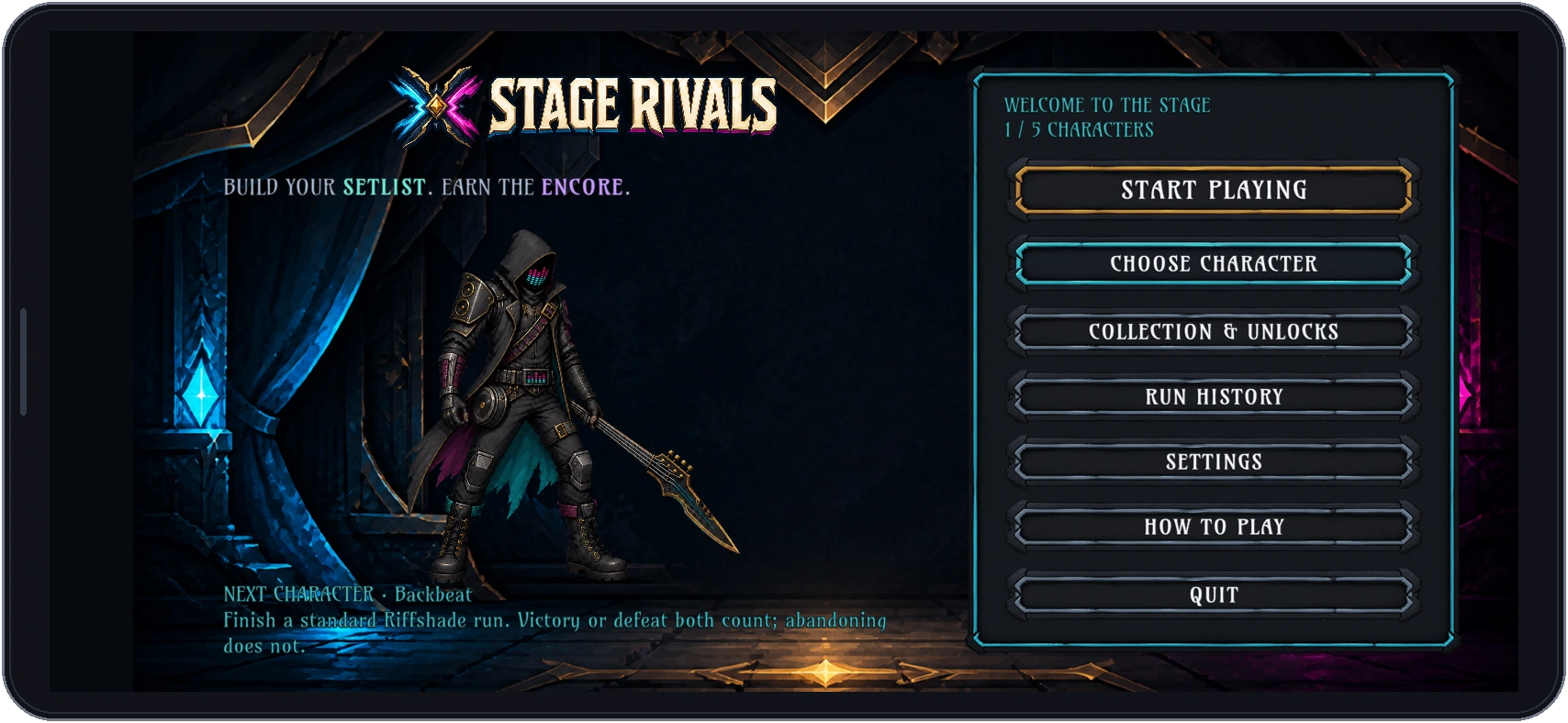
Real screens from the current captured Android development build, shown in a landscape phone frame.
 View full screen ↗View full screen ↗View full screen ↗View full screen ↗View full screen ↗
 View full screen ↗
09 · Useful answers
Before the
curtain rises.
What kind of game is Stage Rivals?
A music-themed, turn-based deckbuilding roguelike. You build a deck, plan combat turns, and make choices across a tour.
Do I need musical training?
No musical theory knowledge is needed to understand the core loop. Instruments and musical ideas give the cards and world their identity; decisions revolve around the effects shown in the game.
Is it a rhythm game?
Combat is turn-based. You choose cards and targets rather than tapping notes to a timing chart.
How are Improvisations different from Stage Tricks?
Improvisations provide passive effects during a tour. Stage Tricks are consumable tools used for an immediate effect.
Can I play it now?
Stage Rivals is in development. Public release details will be shared when they are ready.
The next performance is taking shape.
Stage Rivals is in development at Earmonic Games. For questions about the game, contact the team.
Contact Earmonic Games ↗